Definition
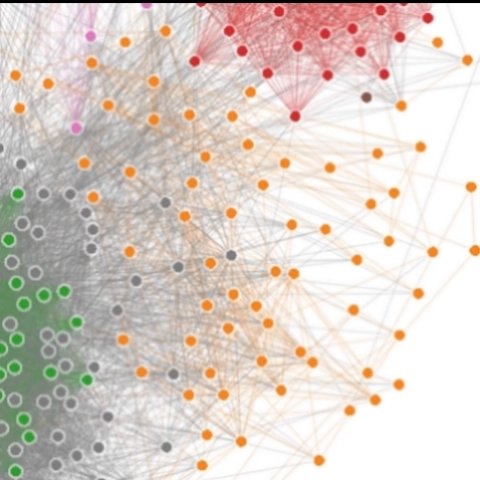
A Force Directed Graph is a data visualization Drawing
Force Directed Graph or FDG are drawn or produced
by a class of algorithms for drawing graphs for a set of
nodes & edges
The intent is to position the nodes of a graph
in a two-dimensional or three-dimensional space
such that all the edges are of equal length
with none or perhaps few crossing edges
This can be achieved by assigning forces
among the set of nodes & edges
based on their relative positions
and hence applying these forces either to
simulate the motion of these
nodes & edges
It is a graph that is represented by Force Directed Tree
Force Directed Tree
🌳
Tree
uses an array of objects as the data
with an assigned value which determines
the size of the node
can be
📍 multi-level
📍 hierarchical
⭕
Nodes
A node is a tree item represented by a circle with an assigned value
Properties
Nodes can have many children & one parent
Top-level nodes
originates from the top level of data don't have any parent
Fixed Nodes
Collapsible Nodes
Nodes can expand or collapse
toggling the visibility of its descendant nodes
Values
The value of a node is a sum of values of its children
Size
The size of a node depends on its value
The actual size of the node
is calculated in how its value relates to
the maximum value across the entire tree structure
The radius of the circle is controlled by
the settings of the scale of the
smallest, biggest & in-between nodes
🎡
SVG
🌄 Images denoting the
⭕ Nodes
👣 Paths
which provide:
Labels
Controls
Toggling
🔗
LINKS
Definition
Links are defined as connect nodes
to display (complex) relations
between a source and a target
based on the following
Properties
Length
Thickness
Colors
🥊
FORCES
Force Directed Graph drawing algorithms assign forces among the set of nodes & edges
-
Typically, in graph drawing:
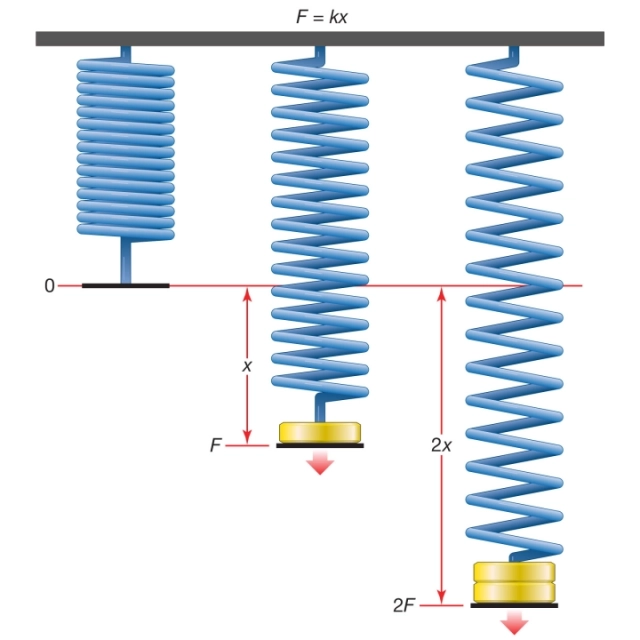
spring-like attractive forces are based on
Hookes Law to
attract pairs of endpoints of the graph's edges towards each other
- while Coulomb's law defines repulsive forces separating every pair of nodes.
- In equilibrium states:
the edges tend to have uniform spring-like force for every pair of nodes
- An alternative model considers a spring-like force ∀ pair of nodes (I, j)
where the ideal length δ(i, j) of each spring is ∝ the graph-theoretic distance
between nodes (i, j) without using a separate repulsive force.
Minimizing the difference (usually the squared difference)
between Euclidean & ideal distances between nodes is equivalent to
a metric multidimensional scaling problem
Visually highlights
📍 Direct neighbors of the clicked node
📍 Links connect the clicked node with its neighbors
📍 Edge attraction
📍 Vertex repulsion
using functions that are not based on
the physical behavior of springs & particles
some force-directed systems use springs
whose attractive force is logarithmic
Hookes Law
Data
Types
📍 In-line Data
📍 ExternalData
Data Fields
Property is a key-value object
key
A Key is a specific structured field
eg value or a name